Globally, identity fraud costs people, businesses, and governments more than USD 1 trillion each year!
This is a critical cyber security challenge that impacts almost every identity issued and affects nearly the entire population of the World.
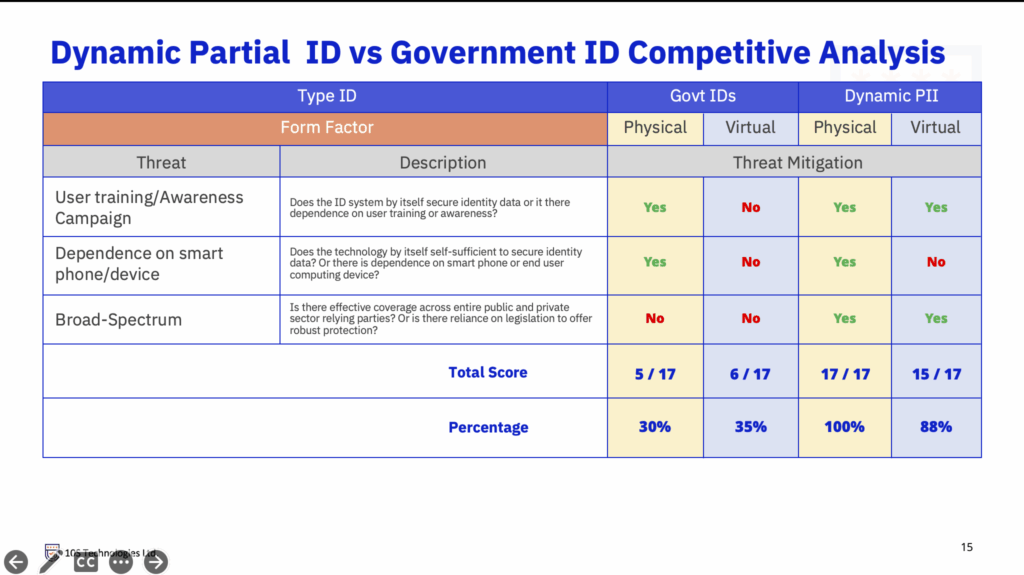
The novelty offered by this patent pending technique relates to safeguarding Personally Identifiable Information (PII) by offering Dynamic Partial ID (DPID), which eliminates static PII.
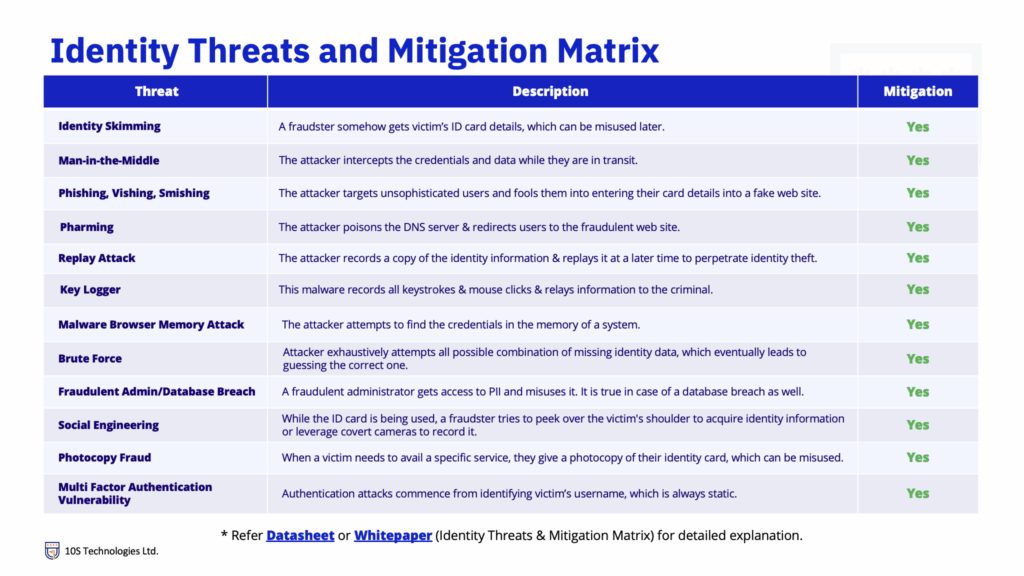
This approach provides the broadest protection against all known identity threats known to exist such as, card skimming, Phishing, MITM, Fraudulent Admin/Database breach, Multi Factor Authentication Vulnerability etc.
Various ‘real world/physical’ and ‘online’ identities can be protected for example passports, driving licenses, national ID cards, bank cards, identity wallets, Username/password etc.
Issuing Authorities include government agencies responsible for passports, driver’s licenses, national identity cards, voter IDs, and bank cards.
One of the system’s innovations and a key distinction is that the ID card won’t display the entire identity number. Rather, a Partial Identity Number (PID) is displayed.
As per Steve Knack, a senior economist at the World Bank, trust accounts for 99.5% of GDP. This identity framework has the potential to significantly bolster economy while addressing critical issues in cybersecurity.